-
Siersdorf Commandery
-
-
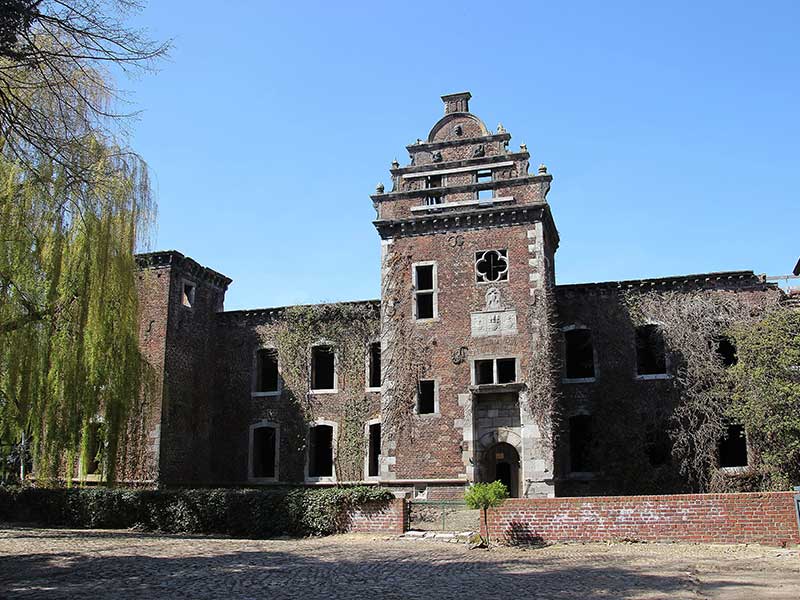
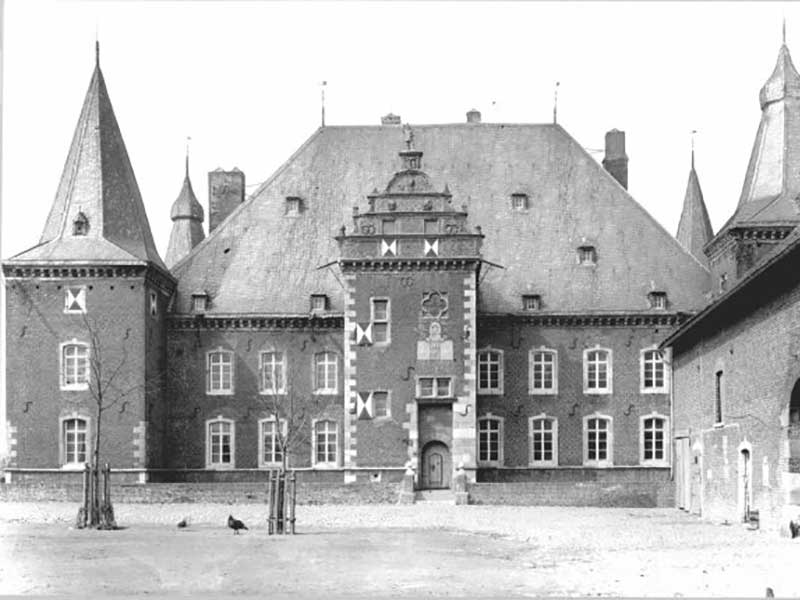
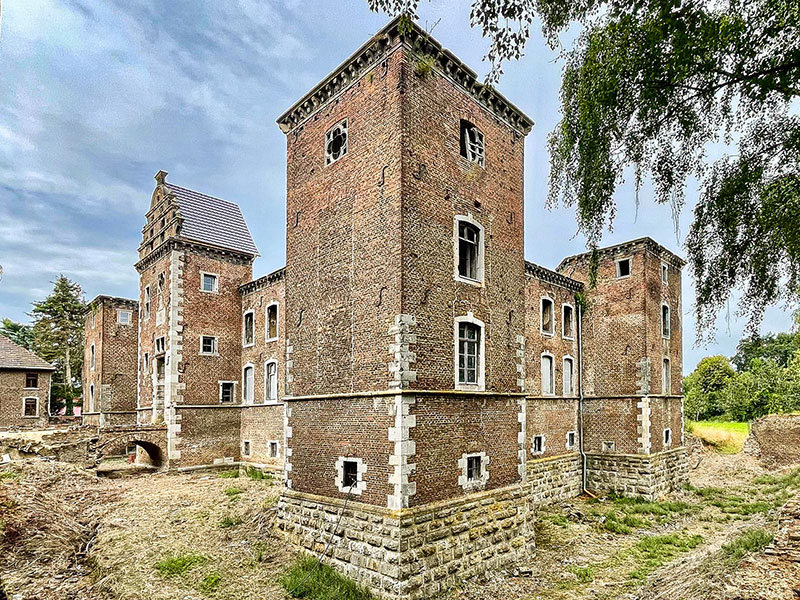
The ruins of the Siersdorf Commandery still give an idea of what a magnificent building it once was. For 600 years, the complex served as the administrative headquarters and residence for the Knights of the Teutonic Order.
The centrepiece is the brick manor house, a single-winged complex measuring more than 1,000 square metres with four square corner towers. Diagonal corridors lead from the main building to the towers. The Renaissance-style building is surrounded by a deep moat. The four-storey hipped roof and the tower spires were destroyed during the Second World War and have not been rebuilt since.
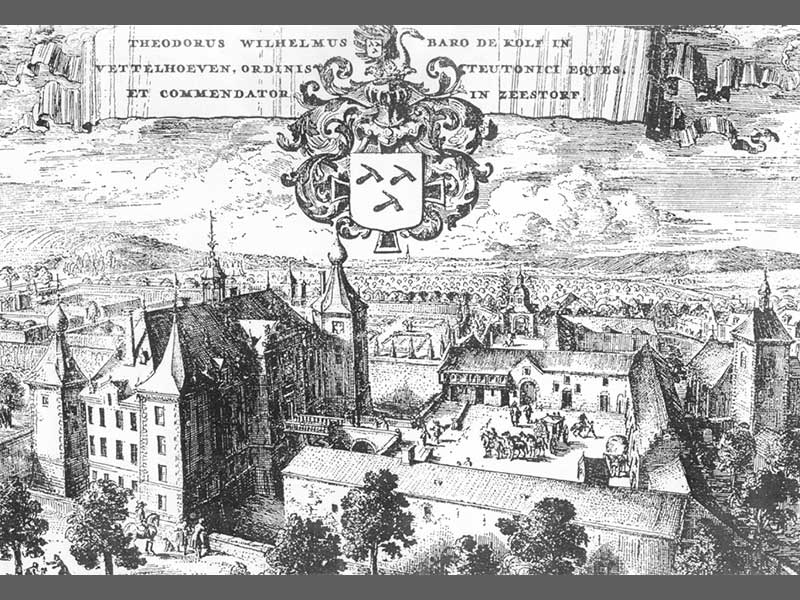
In the past, the Teutonic Order's commandery in Siersdorf consisted of a parish church, U-shaped farm buildings, two estates (a small and a large one) and the manor house. The first commandery was built by the Teutonic Order between 1264 and 1267 after a donation by William III and another by William IV, Count of Jülich.
When Emperor Charles V and Duke William V of Jülich-Kleve-Berg fought over the rule of the Duchy of Geldern in 1542/43, mercenaries reduced the commandery and the farmstead to ruins. Heinrich von Reuschenberg rebuilt the manor house in 1578 in the Renaissance style.
In 1607, the large courtyard was rebuilt and in 1750 the manor house was renovated. French troops occupied and plundered the commandery in 1794 during the First Coalition War. After further restoration in 1920, the complex was largely destroyed during the Second World War and subsequently fell into ruin.
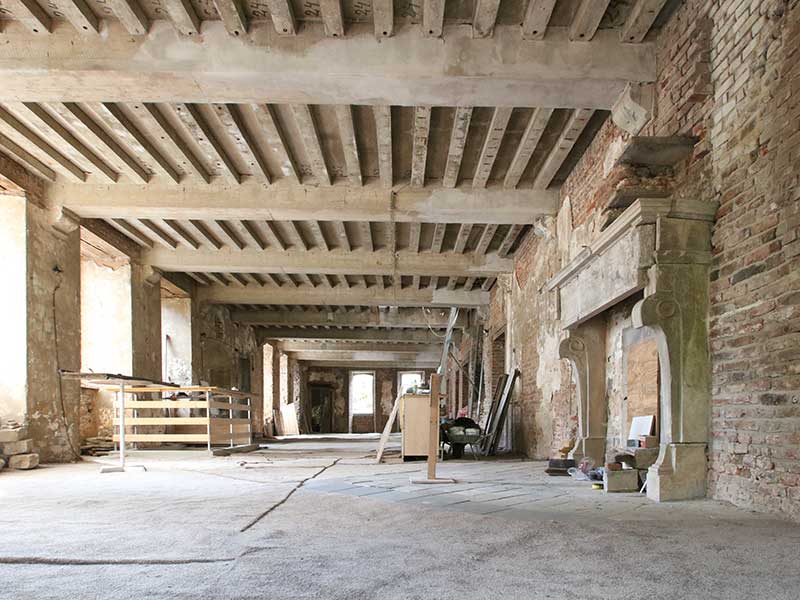
Today, the commandery is owned by a support association, which is renovating and restoring it with federal, state and its own funds.