-
Schmidtheim Castle
-

-
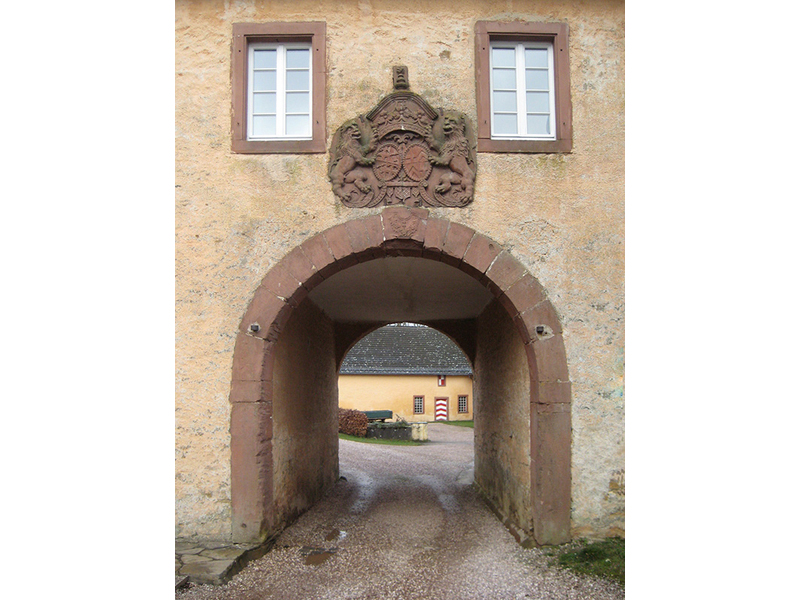
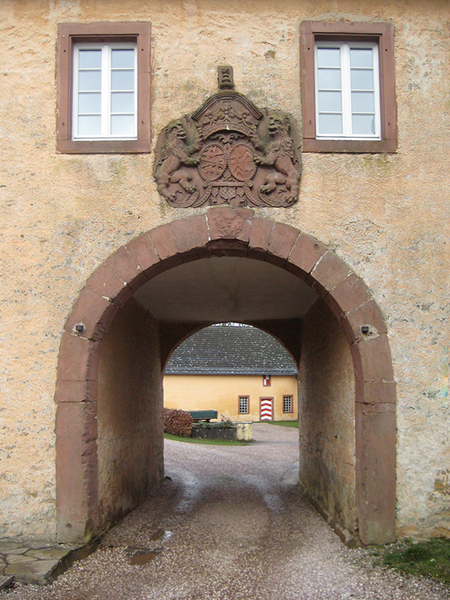
An eye-catching feature in the countryside: Schmidtheim Castle dominates the surrounding area with its four-storey residential tower and outbuildings. The castle, which was built between the 16th and 18th centuries, is one of the best-preserved manor houses in the Eifel region. After Eva von Schmidtheim married Damian Beissel in 1511, the castle came into the possession of the Beissel von Gymnich family.
It was originally a moated castle. At an altitude of 545 metres above sea level, it was the highest fortification in the Rhineland until 1890. In that year, the castle burned down and the moats were filled in during restoration work. Near the castle entrance is the former court lime tree, which is now a natural monument.
History of the village
The area that is now Schmidtheim was already important in Roman times. The Roman road runs close to the present-day village, and the remains of Roman buildings can be found nearby. Schmidtheim was first mentioned in 867 in the Golden Book of Prüm Abbey.
The name of the village can be traced back to iron smelting and processing in the region. Iron ore was mined underground until the second half of the 19th century, while above ground the focus was on brown iron ore. Many of the former above-ground excavation sites can still be seen today southwest of Schmidtheim.
The importance of ironworking is reflected in the name of the village of Schmidtheim ("Schmiedeheim, meaning "smithy"). The coat of arms of the municipality of Dahlem, featuring three hammers, was originally the coat of arms of the Lords of Schmidtheim and also documents the importance of the local iron industry. The coat of arms of the Lords of Schmidtheim can be seen as a beautiful piece of stonework above the gate entrance to the castle courtyard.