-
Jülich Citadel
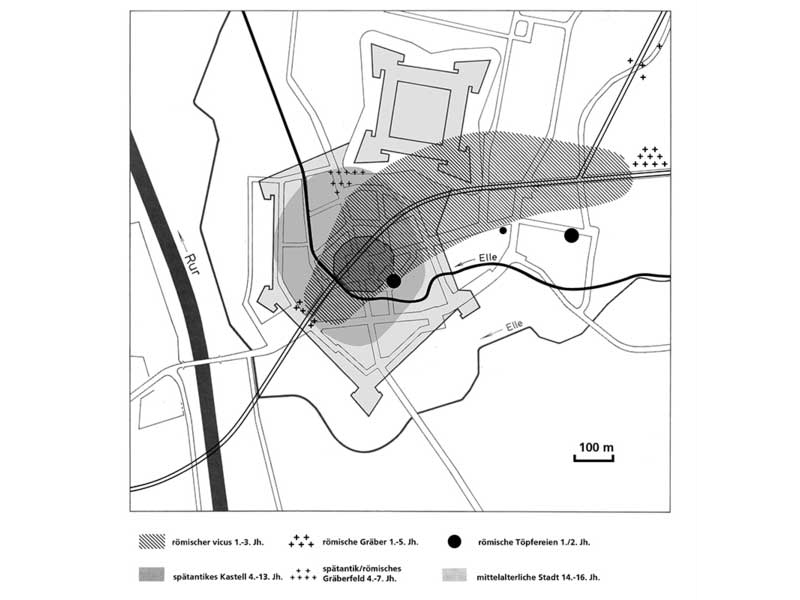
Antiquity and its rebirth are united in this place: the Jülich Citadel, built in the style of the Italian High Renaissance, is not only based on ancient models – it also stands above relics from Roman times. During the construction of the fortress in 1566 and 1569, workers found ancient gold and silver coins. The excavated earth was used to build the ramparts and bastions of the citadel. This is why Roman brick and ceramic fragments can also be found there.
During the construction of the underground car park in front of the citadel in 1986/87, a large burial ground was discovered. With approximately 280 archaeologically examined graves dating from the 4th to 7th centuries, it is one of the most important archaeological sites in the Rhineland, documenting the period from late antiquity to the early Middle Ages. For Jülich, the oldest town within the duchy of the same name, this proves that it was continuously inhabited during this turbulent period of migration.
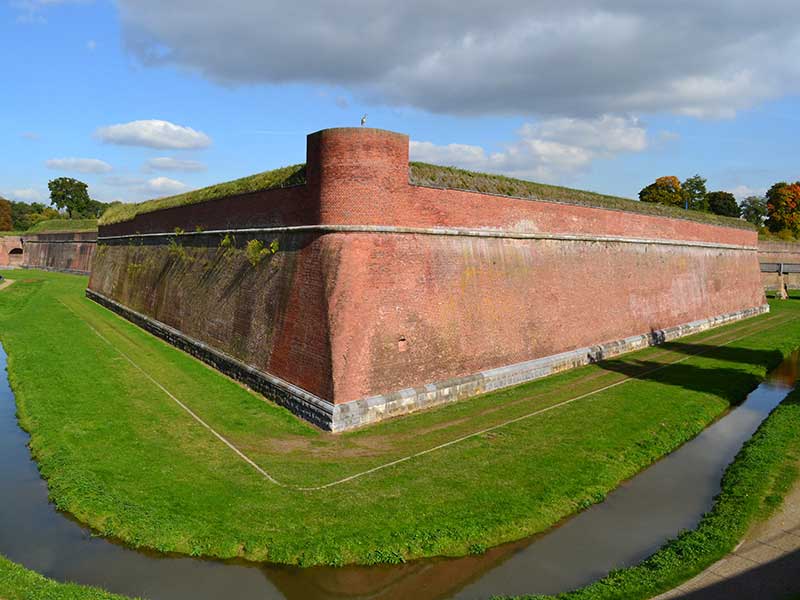
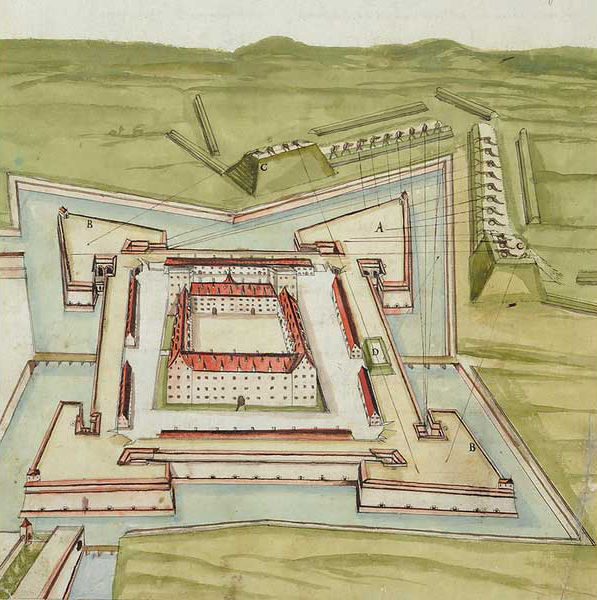
The citadel itself is still an impressive sight today: covering an area of nine hectares, it is a testament to Renaissance fortress and castle architecture. Duke William V of Jülich-Kleve-Berg commissioned the construction, which was designed by the Italian architect and fortification engineer Alessandro Pasqualini from Bologna. The remains of the castle in the citadel still display elaborate architectural decorations. Today, the castle fortress houses the municipal grammar school and the Citadel Museum with its documentation centre on the Via Belgica.