-
Roman city gate
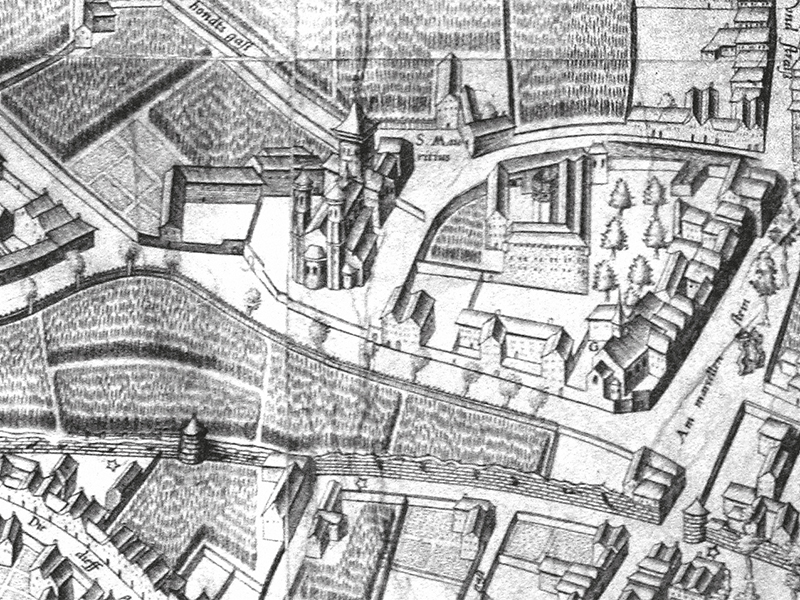
St. Mauritius
-
-
St. Mauritius
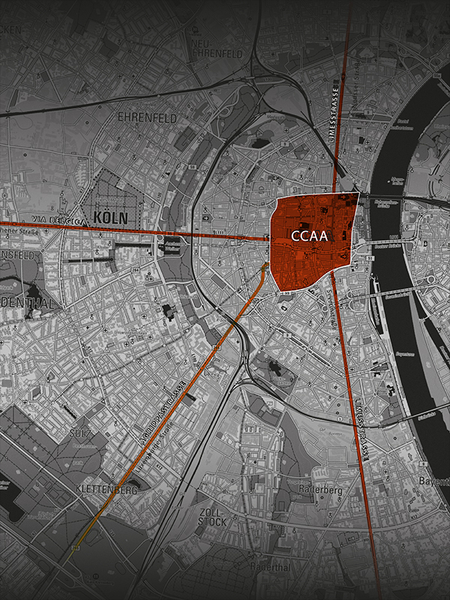
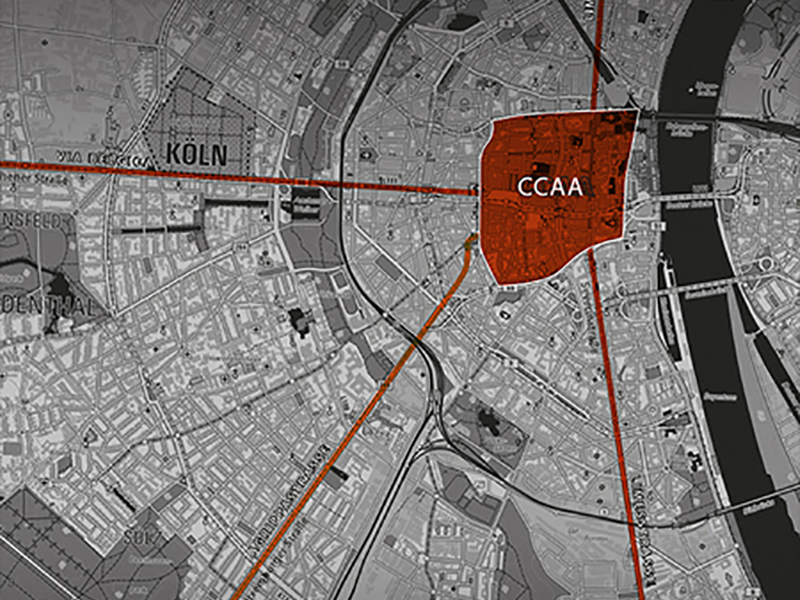
Like the Via Belgica, the Via Agrippa, which is over 700 kilometres long, begins in the west of the CCAA (Colonia Claudia Ara Agrippinensium). Here, the city wall had three monumentally constructed gates. The southernmost of these was the starting point of the long-distance road to Trier.
From there, the Via Agrippa ran straight west for a short distance and then turned sharply to the southwest: today's Mauritiussteinweg, Josef-Schwartz-Anlage Park, Huhnsgasse, Weyerstraße and Barbarossaplatz square. From here, today's Luxemburger Straße still runs for long stretches along the route of the Via Agrippa, which leads across the countryside without any bends, to Zülpich.
The parish church of St. Mauritius has stood in the immediate vicinity of the Roman city gate since the 12th century. According to legend, Mauritius was the leader of the Theban Legion, which also included the Christian martyrs Gereon, Victor, Cassius and Florentius.
The Romanesque church, which was redesigned in the Baroque style in the 18th century, and the Benedictine convent were largely destroyed during the Second World War and rebuilt in a modern style. A Baroque monastery extension, the Wolkenburg in Mauritiussteinweg, is the clubhouse of the Cologne men's choir "Cäcilia Wolkenburg".