-
Roman burial chamber in Weiden
-
-
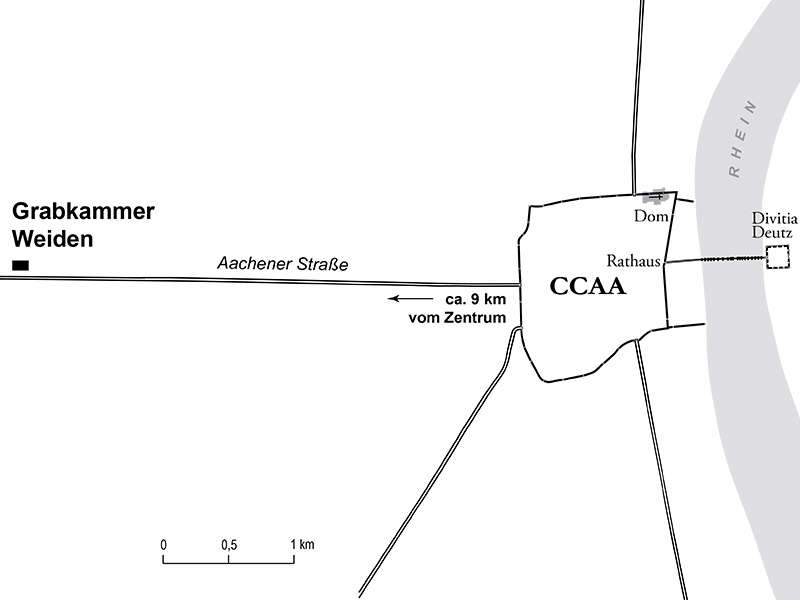
The Roman tomb in Cologne-Weiden is the treasure chest among the archaeological monuments of the Rhineland. Built from stone blocks weighing several tonnes and sealed with a massive trapdoor, the underground burial chamber was discovered by chance during construction work in 1843. It is located directly on the Roman long-distance road, about nine kilometres outside the walls of Roman Cologne.
The Roman tomb was purchased by the Prussian state in 1844 and provided with a protective structure. It is the first archaeological monument on the Rhine to have been preserved and made accessible to the public.
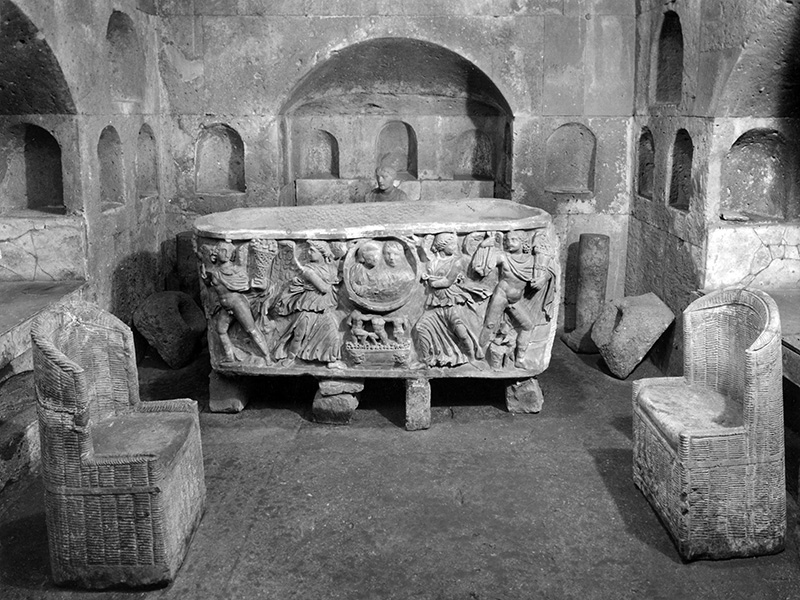
The burial chamber from the 2nd century AD is luxuriously furnished as a dining room. As if made for eternity, the sofas and armchairs are made of precious marble and limestone. The tomb was used by a wealthy family for generations until the 4th century AD. They were probably the owners of a large estate (villa rustica) in the area. Marble portraits depict deceased members of the family.
A representative tomb rose above the underground burial complex. Originally, the marble sarcophagus, richly decorated with figures and imported from Rome, stood there. Today, it is on display in the burial chamber. The family tomb was not the only burial site at this location. There were other tombs nearby.
On the opposite side of the Via Belgica, the remains of a building's walls were discovered. It may have been a mansio – a rest stop on the Roman imperial road. Here, travellers could spend the night, eat and relax in the baths. Stables and workshops, blacksmiths and wheelwrights for the carriages, veterinarians and animal carers for the draft animals were available to guests.