-
Historic town centre
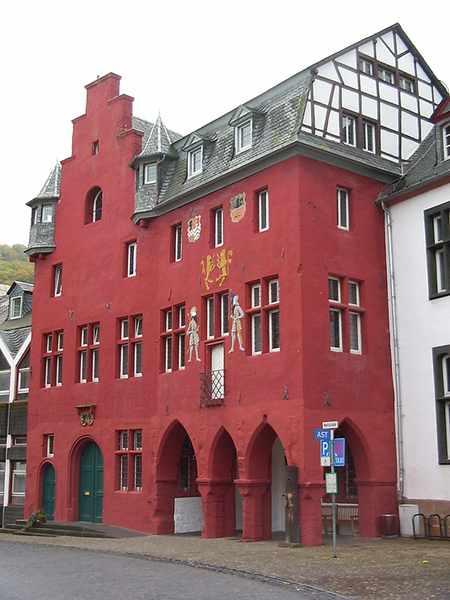
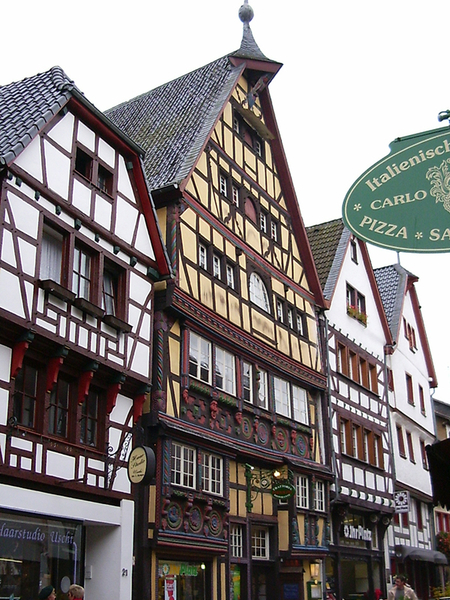
The historic town centre of Bad Münstereifel is a listed monument. Of supra-regional importance are the Romanesque collegiate church, the Romanesque house, the Gothic town hall, the Jesuit church and the half-timbered house “Windeckhaus”. Bad Münstereifel has an eventful history.
The town developed outside the gates of the monastery, which was founded around 830, and prospered so well that by the end of the 12th century it had an important church, a market, a court of law and its own self-government.
The economy flourished thanks to the market and merchants who attended the large trade fairs in Frankfurt, Antwerp and Cologne.
Around 1600, the town fell into a sales crisis because long-distance trade collapsed. The council initiated the turnaround: it made the town the centre of the Counter-Reformation. The newly settled Capuchins, Jesuits and Carmelites also brought impetus to the economy.
With the invasion of the French in 1794, Münstereifel lost its status as co-capital of the Duchy of Jülich. The ecclesiastical institutions were abolished and their possessions were sold at an auction.
After the transition to Prussia, the economy and population stagnated in the 19th century. However, this meant that the attractive townscape was preserved – and from 1881 onwards, Münstereifel turned its attention to tourism. This development was promoted by the connection to the railway network and the expansion of the Kneipp spa.