-
Rur crossing / “Brückenkopf” (bridgehead)
The Via Belgica crossed the river Rur near this point. The river, named after the Roman goddess Rura, was a serious obstacle to traffic in ancient times, due to its irregular water levels. In addition, the Rur did not flow in a fixed riverbed, but constantly sought new paths. It thus formed a wide, swampy barrier that was difficult to cross. Today, the Rur is regulated by dams.
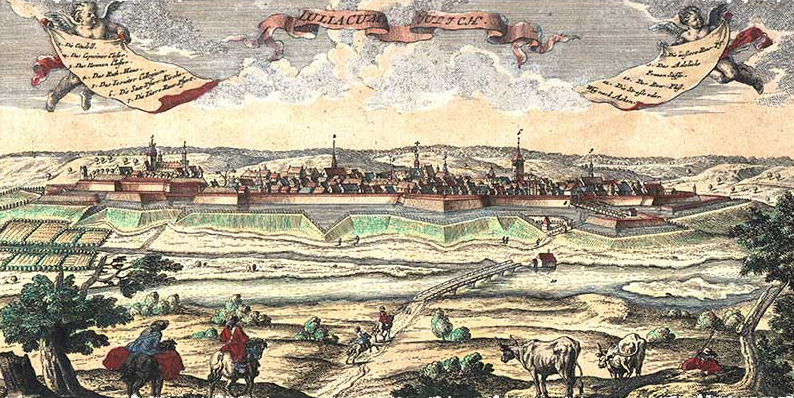
A favourable place to cross the river was the narrowing of the Rur valley in the area of today's town of Jülich. Around the time of Christ's birth, the town of Iuliacum was therefore founded on the river Rur.
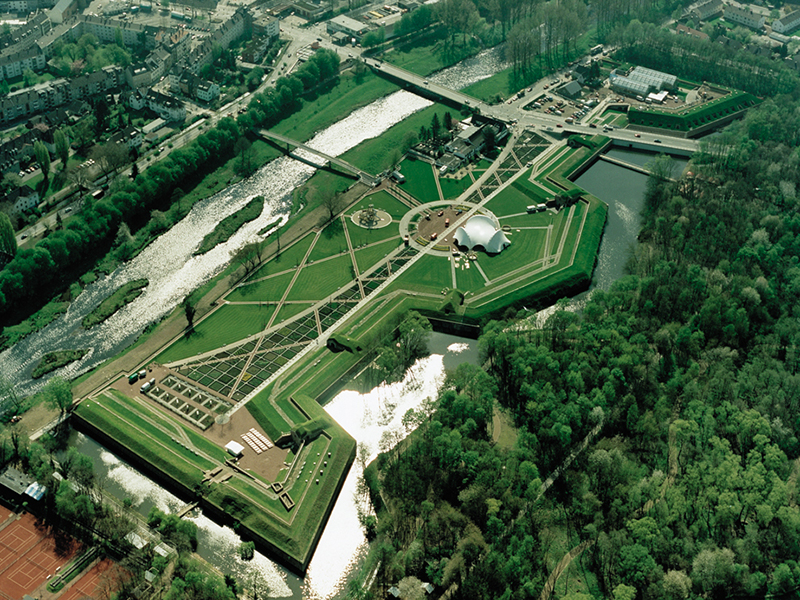
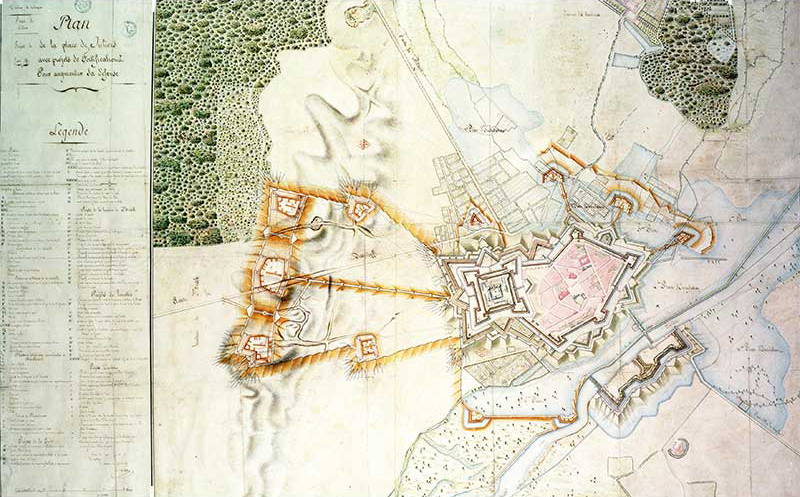
The exact location of the Roman bridge is unknown. It is believed to have been situated between today's motorway bridge and the Kirchberger Straße pedestrian bridge. On the other side of the Rur, a small vicus was founded near Neubourheim/Wackersmühle as a counterpart to the settlement (vicus) of Jülich. The bridge was a crucial point on the Via Belgica. Since late antiquity, it has therefore been given special protection: at the beginning of the 19th century, Napoleon built the "bridgehead" opposite the town – an imposing fortification designed to secure the crossing over the river Rur. This location was also fiercely contested during the Second World War.