-
Limesstraße
St. Severin -
-
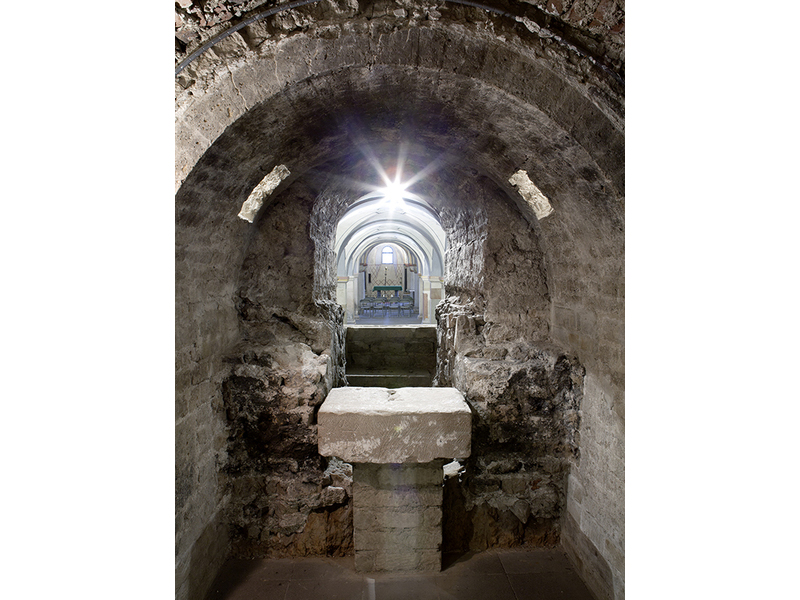
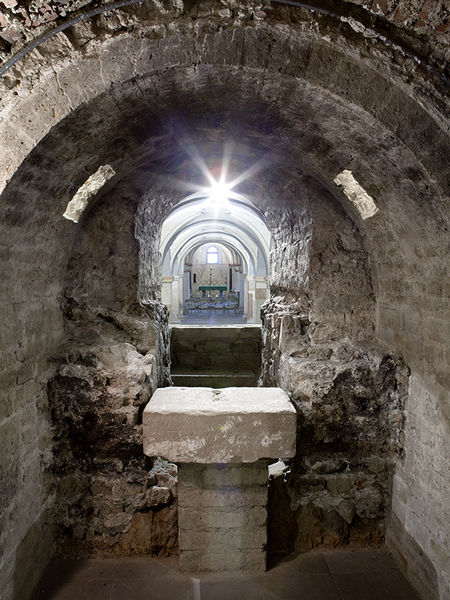
St Severin's Church is not strictly oriented towards the east. The reason for this is a late antique tomb, which, in accordance with Roman tradition, faced the passing long-distance road (today's road “Severinstraße”). All later church buildings erected above this structure respected this orientation.
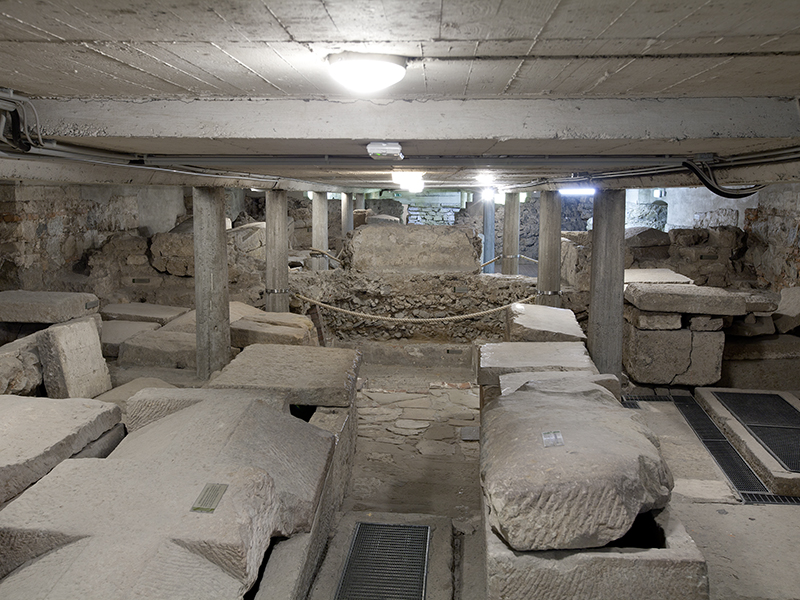
The preserved excavation site beneath the church is part of the large southern cemetery on both sides of the Via Agrippa. It provides an impressive picture of the forms of burial in Roman and Frankish times. Graves, sarcophagi and tombs can be viewed here in their original location.
Between the 10th and 15th centuries, the Romanesque-Gothic pillar basilica and former collegiate church of St Severin took on its present appearance in various construction phases. Church of St Severin, “Severinstraße” road, “Severinsviertel” quarter, “Severinstorburg” city gate and “Severinsbrücke” bridge – they are all located in the heart of the southern part of the city and are named after St Severin. Severin lived in Roman Cologne around 400 and is the third bishop of the city known by name.