-
Limesstraße Eigelsteintorburg
-
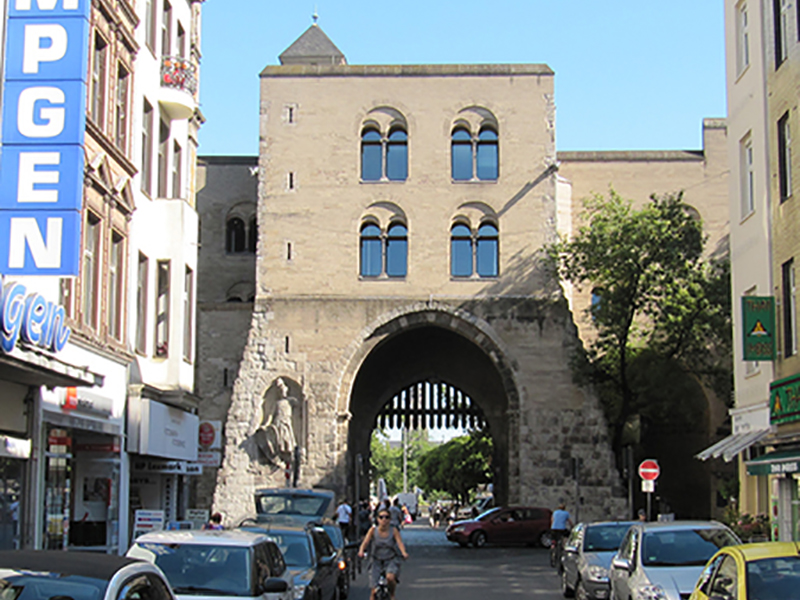
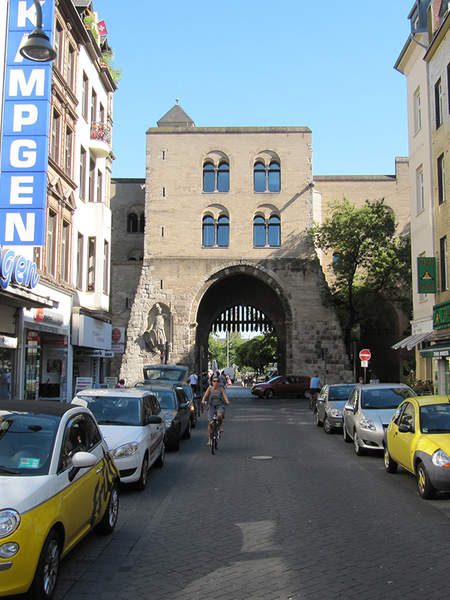
Eigelstein is the name of the street that still follows the route of the road “Limesstraße” to the north. In Roman times, extensive cemeteries lined the long-distance road from here. A monumental funerary monument, which was still standing in the 12th century and was popularly known as Eigelstein, gave the street, the medieval city gate and the entire district its name. The Eigelsteintorburg is the third of Cologne's surviving medieval gate towers. It was spared demolition at the end of the 19th century when the city wall was torn down and served as a museum building.
Since 1891, the city side of the west tower has been adorned by the "Kölsche Boor": this Cologne peasant does not represent the peasant in Cologne's carnival trio; nor does he represent the cabbage farmers of the Eigelstein district in the Middle Ages and modern times, but is a symbol of the city's loyalty to the empire. The figure was erected on the occasion of Emperor Wilhelm II's visit; the original is now in Cologne City Hall.
Opposite, in the large niche of the east tower, the sinking of the warship S.M.S. Cöln off Heligoland on 28 August 1914 is commemorated. Only the chief stoker, Adolf Neumann from Cologne, survived. The mail boat with which he was able to save himself was hung here in 1915 next to the cruiser's bow crest.
Looking through the “Eigelsteintorburg” gate from the city side, you can see “Ebertplatz” square and the dead straight road “Neusser Straße”. It follows the route of the Roman “Limesstraße” road past St Agnes Church to the north of Cologne.