-
Limesstraße Waidmarkt
St. Georg
-
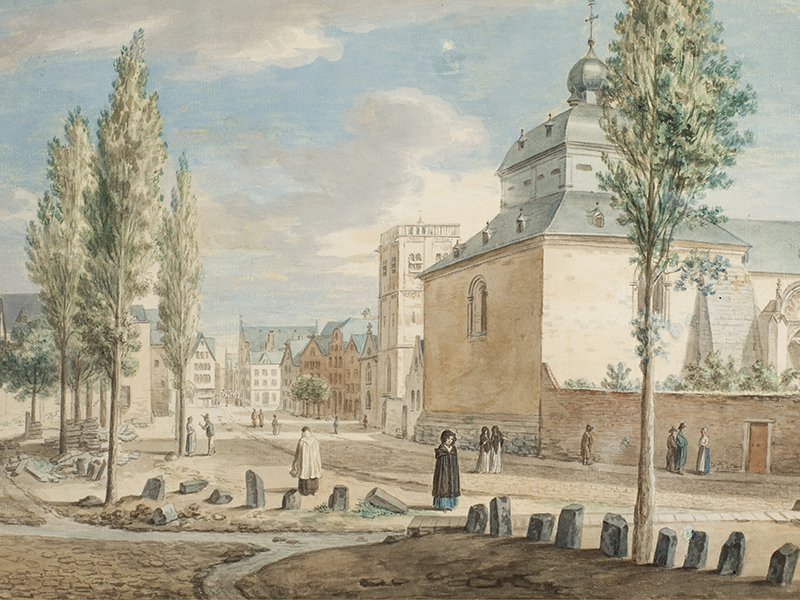
St. Georg
The road “Limesstraße” reaches the suburbs of Roman Cologne (suburbium) at the level of today's “Waidmarkt” square. Until the late 3rd century AD, this settlement outside the south gate was characterised by residential buildings and workshops. It was abandoned when Germanic tribes invaded the Rhine and penetrated deep into the empire. In late Roman times, only graves were laid out in the ruins.
Since the 11th century, St George's Church has literally stood in the way here. The church towers over the Via Agrippa and was therefore visible to travellers and pilgrims from afar. The road was widened at this point to form a square, the “Waidmarkt”.
The name "Waidmarkt" comes from the woad plant, which provided the dye for blue-colouring textiles. The running water needed for dyeing came from the Blaubach stream, which today runs under the street of the same name. Under the supervision of two market masters who checked weight and quality, the dye plant could only be traded in Cologne at this square.