-
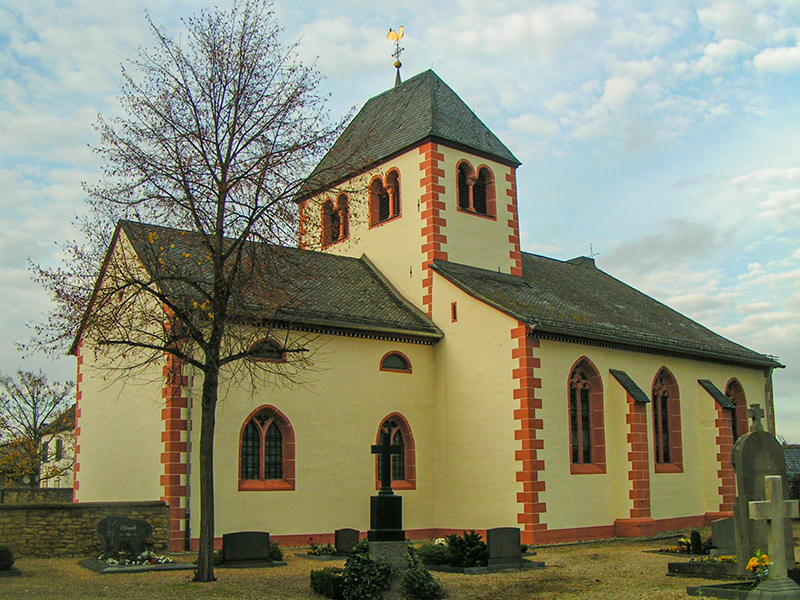
Parish Church of St. Kunibert
-
-
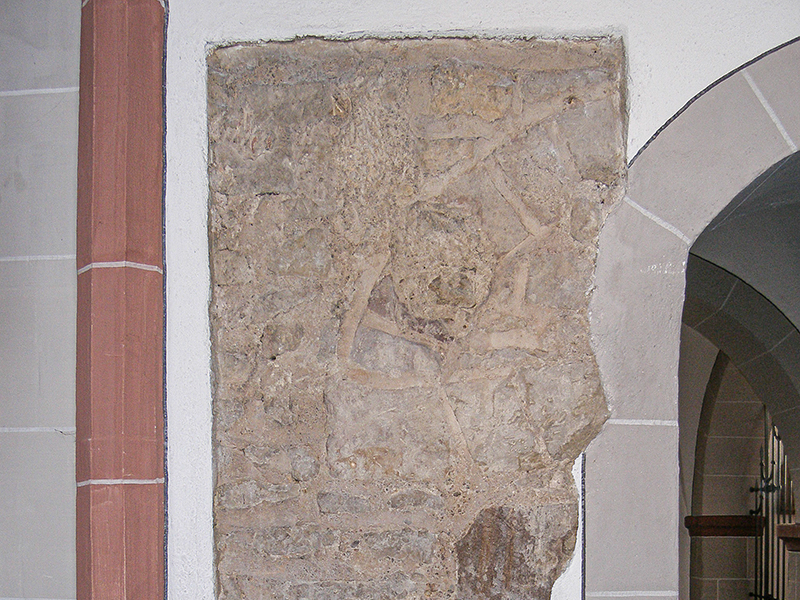
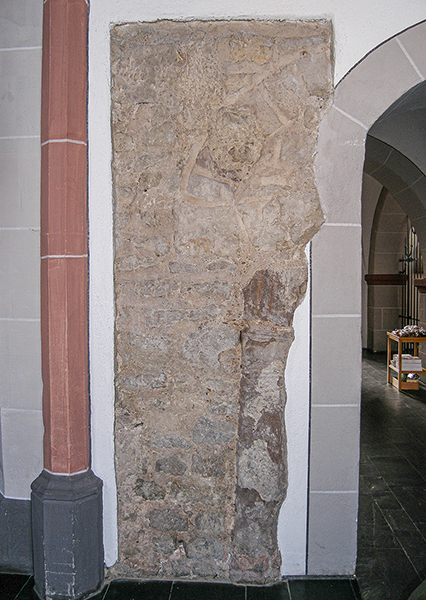
A journey through architectural history: the nave and tower of St. Kunibert's Parish Church are partly made up of walls from a Roman building, probably a two-storey country house (villa rustica). In addition to walls and floor screeds, renovation work also uncovered the remains of a bath with hypocaust heating, a kind of ancient precursor to underfloor heating. The fact that the Christian community converted existing parts of the building from Roman times into a place of worship explains why it is not oriented towards the east, as is usually the case with medieval churches. Remains of the Roman masonry can be seen in the basement of the tower and in the side aisle.
Further sections of wall are preserved in the choir arch and tower in two places at a height of more than ten metres in the original stonework. Roman masonry at this height can otherwise only be found in Cologne or Trier. The Roman building was probably used as a church from 1031 at the latest. Extensions in the following centuries were probably funded by the Gertzen family, who were based in Sinzenich and Langendorf.
The core structure from Roman times is dominated by medieval architectural styles: St. Kunibert's is essentially a late Gothic hall church from the 15th century. Remnants of the previous Romanesque-style building can be seen, for example, in the almost square choir, which dates from the first half of the 13th century. The four-storey tower rising above the hall roof was already built in the late 11th or early 12th century. A 14th-century sacristy is located in front of the left aisle, while the oratory attached to the tower was not built until the beginning of the 16th century. The two Baroque side altars date from the 17th century, while the current high altar was not created until the early 1960s.